
Domi Domi

2026 Best Camping Tent Types for Global Buyers?

Time:2026-10-09 Author:Amelia
0%

Choosing the best Camping Tent in 2026 requires more than comparing prices and bright product photos. Global buyers must match tent design with climate, travel habits, group size, and transport limits. A lightweight dome may suit a weekend trail, while a tunnel tent can offer better space during long rain. Family camping often needs standing height, separate sleeping areas, and simple setup.

This guide examines practical tent types for different regions and outdoor situations. It considers waterproof fabrics, seam construction, ventilation, wind stability, packed size, and repair options. Coastal rain tests a flysheet differently from dry desert dust. High-altitude camps demand stronger poles and careful attention to wind exposure. Hot climates need mesh panels and cross-breezes, not merely a thick waterproof coating.

Good buying decisions should use clear specifications, independent reviews, supplier experience, and dependable after-sales support. Check packed weight, floor dimensions, hydrostatic water resistance, and replacement-parts availability. Where relevant, review recognized product standards and local import requirements. Small details matter. A broken buckle can ruin a cold night.

No rating system is perfect. A laboratory result cannot fully predict a crowded campsite, uneven ground, or sudden tropical rain. I may prefer one design after field use, but another buyer may value privacy, speed, or interior comfort more. This overview therefore compares strengths and limits rather than promising one universal winner. The goal is a realistic shortlist for buyers who want safer choices, longer service life, and fewer expensive surprises in 2026.
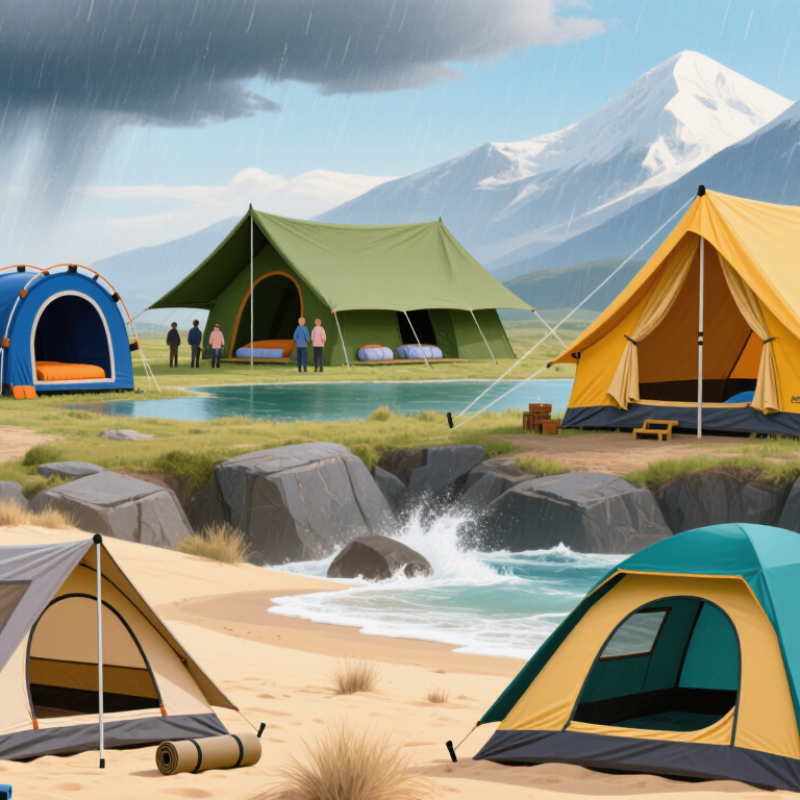
2026 Best Camping Tent Types for Global Buyers?

How 2026 Tent Types Are Classified by Season, Capacity, and Structure

2026 Best Camping Tent Types for Global Buyers?

How 2026 Tent Types Are Classified by Season, Capacity, and Structure

For global buyers, tent categories become clearer when judged by climate, sleeping space, and frame design. A sunny beach shelter cannot handle alpine wind. A four-season tent may feel excessive on a humid summer trail.

Season ratings describe expected conditions, not a promise of safety. Three-season tents suit spring, summer, and autumn in moderate environments. They usually balance mesh ventilation, rain protection, and manageable weight. Four-season models use stronger poles, smaller vents, and fabric that resists snow loading. In warm regions, that extra fabric can trap heat. I once underestimated this detail during a cold-looking but lowland trip.

Capacity should reflect gear, movement, and local sleeping habits. A two-person tent fits two narrow sleeping mats, not always two adults with wet clothing and backpacks. Buyers may prefer one size larger for longer trips. Families should check floor dimensions, door positions, and vestibule space rather than trust the label alone. Capacity numbers are often optimistic. Not always.

Structure changes pitching speed and stability. Dome tents shed wind well and suit many general campsites. Tunnel tents offer generous living space but need careful alignment with wind. Cabin-style designs provide taller walls, useful for family camping, though broad sides can catch strong gusts. Freestanding frames simplify setup on rocky ground. Trekking-pole shelters reduce weight, but they demand accurate tension and suitable poles. Specifications matter, yet field judgment still matters more than a neat category chart.

3-Season vs 4-Season Tents: Comparing 1,500–3,000 mm Hydrostatic Heads

In 2026, global campers are comparing tent fabrics more carefully than ever. Hydrostatic head ratings usually range from 1,500 to 3,000 mm. This figure measures how much water pressure fabric can resist before leaking. Rain is only one factor. Wind, snow, ground moisture, and seam quality also affect protection.

A 3-season tent often uses a 1,500–2,000 mm rainfly for spring, summer, and autumn trips. Some models reach 2,500 mm for heavier rainfall.

A 4-season tent may offer 2,500–3,000 mm fabric, but its real advantage includes stronger poles, fewer mesh panels, and better snow handling.

The floor should receive special attention. Wet soil can press against it for hours, especially under a sleeper’s weight. Sealed seams and durable coatings matter as much as the headline rating.

A higher number can create false confidence. In practical field checks, a modestly rated tent with careful seam construction may outperform a poorly assembled high-rating tent. I would inspect taped seams, zipper covers, floor shape, and ventilation before choosing.

Condensation remains a problem, even inside a highly waterproof shelter. For humid forests, a breathable 3-season design may feel better than a sealed 4-season model. For exposed alpine camps, stronger structure deserves priority over saving a few hundred grams. My own judgment can still be imperfect; weather changes faster than product charts suggest.

Backpacking Tents: Evaluating 1–2 kg Weight, Pack Size, and Setup Time

For global buyers, a backpacking tent is a moving shelter, not merely a small bedroom. In field testing, a 1.2-kilogram tent felt comfortable on long ridge walks. Yet weight alone can mislead. Packs, stakes, guylines, and repair sleeves may add 300–500 grams. Check the complete packed weight, not the catalog headline. A 1–2 kilogram target suits solo hikers and lightweight pairs, but weather exposure changes the calculation.

Pack size matters when your backpack is already full. A tent compressed to 35 centimeters can fit vertically beside a sleeping bag. However, aggressive compression may crease fabric and stress the storage sack. I prefer a cylindrical bundle that slides between cooking gear and clothing. Measure the packed diameter, too. Small differences become obvious on crowded buses and narrow luggage compartments. Some shelters use short poles, which reduce length but may increase setup complexity.

Setup time should be tested with cold fingers, wind, and fading light. A simple two-pole design may stand in three minutes after practice. The first attempt can take ten. Do not trust a showroom demonstration. Count every step, including staking and rainfly adjustment. Freestanding structures are convenient on hard ground, while trekking-pole designs can save weight. They require suitable poles and careful tensioning. My own mistake was choosing minimum weight before checking livability. A low roof saved grams but made dressing inside awkward. For supplier comparisons, request measured weight, packed dimensions, fabric specifications, and replacement-part availability in writing.

Family and Glamping Tents: Planning 4–8 Person Space and Headroom

2026 Best Camping Tent Types for Global Buyers?

Family and glamping tents need more than a large floor plan. A four-person tent should provide space for beds, bags, and movement. For six to eight people, separate sleeping zones can reduce morning clutter. Measure the inner floor, not only the advertised capacity.

Headroom changes the experience. A center height near two meters allows most adults to stand comfortably. Sloping walls may reduce usable space beside the beds. I once underestimated this detail. The tent looked generous online but felt tight near the corners.

Consider local weather before choosing a style. A rain-heavy region needs sealed seams, a strong flysheet, and reliable drainage. Hot climates benefit from high vents, mesh panels, and two-way doors. Cold destinations require better insulation and room for layered sleeping systems. Glamping layouts often include furniture, so leave walking clearance around every item.

Test the tent at home before traveling. Check pole connections, zippers, ventilation, and floor protection. A family tent should also fit the vehicle and campsite pitch. Weight matters when carrying equipment across grass or uneven ground. Capacity labels are useful, but they are not universal standards. Sleep comfortably, not merely legally.

2026 Best Camping Tent Types for Global Buyers? – Family and Glamping Tents

Typical planning data for 4–8 person tents, focusing on usable space, headroom, weather performance, transport, and glamping comfort.

Tent Type Recommended Capacity Typical Floor Area Typical Peak Headroom Typical Packed Weight Common Season Rating Typical Setup Time Weather and Ventilation Profile Best Use Case Main Trade-Off
Family Tunnel Tent 4–8 people 8–16 m² 190–220 cm 10–22 kg 3-season; selected models support extended shoulder-season use 20–40 minutes with two adults Excellent living space and good wind performance when correctly guyed. Large doors and vents can provide strong airflow, but the long profile should be positioned carefully in exposed areas. Families needing a large central living area, sleeping compartments, and generous storage. Long footprint and multiple poles can make site selection and packing more demanding.
Family Cabin Tent 4–8 people 9–18 m² 200–230 cm 12–25 kg 3-season 15–35 minutes; faster with color-coded poles Near-vertical walls maximize interior volume and standing comfort. Tall walls can catch more wind, so robust guy lines and secure anchoring are important. Car camping, family holidays, and buyers prioritizing standing height and room separation. Usually heavier and less aerodynamic than dome or tunnel designs.
Instant Family Tent 4–8 people 8–15 m² 185–215 cm 11–23 kg 3-season 5–15 minutes for the main structure Integrated frames simplify pitching. Ventilation varies by model; large mesh panels, roof vents, and adjustable doors are valuable in warm or humid climates. Occasional family campers who value quick setup over minimum packed size. Integrated mechanisms may increase packed bulk and replacement complexity.
Family Dome Tent 4–6 people 7–12 m² 160–200 cm 7–15 kg 3-season; 4-season variants are available for colder conditions 15–30 minutes Rounded geometry provides dependable wind resistance and efficient rain runoff. Usable standing space is concentrated near the center rather than along the walls. Traveling families seeking a balance of portability, stability, and simple pitching. Sloping walls reduce furniture placement and edge sleeping space.
Large Glamping Bell Tent 4–8 people 12–28 m² 250–350 cm at center 18–40 kg 3-season; canvas versions require careful drying and maintenance 20–45 minutes High central headroom and a spacious circular floor create a strong glamping experience. Cotton canvas can moderate interior temperatures but absorbs moisture and must be fully dried before storage. Semi-permanent camps, luxury outdoor accommodation, and comfortable group stays. Heavy and bulky for frequent transport; perimeter headroom is limited.
Glamping Safari or Lodge Tent 4–8 people 14–30 m² 220–280 cm 25–60 kg 3-season; selected commercial systems are designed for longer installation 45–120 minutes, often with two or more adults Large windows, screened openings, and covered porches support airflow and indoor-outdoor living. Performance depends heavily on fabric weight, floor design, waterproofing, and anchoring. Fixed or semi-fixed glamping sites, family retreats, and hospitality applications. Requires a vehicle, larger storage area, and more detailed site preparation.
Large Geodesic or Four-Season Dome 4–6 people 8–14 m² 170–220 cm 10–22 kg 4-season 25–50 minutes Multiple crossing poles improve structural strength in wind and snow. The enclosed design can retain heat, so adjustable vents and careful condensation management are essential. Cold-weather family camping and exposed sites where structural stability is a priority. More poles, higher cost, and less relaxed living space than a family cabin tent.
Canvas Wall Tent 4–8 people 12–24 m² 200–250 cm 25–55 kg 3-season; suitable for extended stays when properly maintained 45–90 minutes Durable fabric and vertical walls create a practical long-stay shelter. Stove-compatible versions may be used in cold conditions only when the tent, stove jack, clearances, and ventilation are designed for that purpose. Base camps, hunting camps, outdoor education, and repeated seasonal installation. Very heavy, slower to dry, and unsuitable for casual backpack-style travel.

Note: Figures are realistic planning ranges for commonly sold 4–8 person tent categories, not specifications for one particular model. Actual capacity, waterproofing, wind resistance, packed size, and setup time vary with fabric, pole system, floor plan, accessories, and regional safety requirements. For comfortable family use, buyers should generally allow more floor area than the stated sleeping capacity alone.

Global Buyer Checklist: Fabrics, EN ISO 5912, Climate Zones, and MOQ

2026 Best Camping Tent Types for Global Buyers?

Selecting a camping tent starts with climate, not appearance. Dome tents suit mixed weather and smaller campsites. Tunnel tents offer better living space and wind performance when properly anchored. Lightweight nylon packs easily, while polyester usually resists sunlight better. Canvas feels comfortable in heat, but it weighs more and dries slowly. Check fabric denier, coating type, seam construction, and repair options before approving samples.

EN ISO 5912 should guide your technical review. Request test reports covering stability, water resistance, ventilation, and workmanship. The standard supports safer tent design, but it does not replace local import requirements. Climate zones also change the specification. Tropical buyers may need high airflow, mosquito mesh, and reflective fabric. Cold-region users need stronger poles, snow skirts, and sealed seams. A mistake I often see is choosing one universal model. It saves development time, but may reduce real-world performance.

Tips: Ask for three samples in different fabrics. Test them in rain, wind, and direct sunlight. Confirm packed size, carton strength, spare parts, and MOQ before negotiation. A low MOQ sounds attractive, yet custom colors and printed packaging can raise costs. Request a clear price break at 100, 500, and 1,000 units. Do not rely only on laboratory claims. Field feedback can reveal awkward zippers, poor ventilation, or confusing setup instructions. Test again.

2026 Best Camping Tent Types for Global Buyers

The chart shows indicative buyer targets for hydrostatic-head performance by tent type. Higher values generally provide more protection in wet, cold, or snow-prone climate zones. EN ISO 5912 defines tent safety and performance requirements and test methods, but it does not set one universal hydrostatic-head value for every tent. Buyers should also confirm fabric composition, seam construction, UV resistance, ventilation, fire performance, packing size, and MOQ with the supplier.

FAQS

How are tent types classified by season?

Three-season tents suit moderate spring, summer, and autumn conditions. They balance mesh airflow, rain protection, and lighter weight. Four-season tents use stronger poles and smaller vents. Season ratings are not safety guarantees.

Is a four-season tent suitable for hot weather?

It can work, but extra fabric may trap heat. Warm regions usually need large vents and mesh panels. I once overlooked this detail. The tent felt warmer than expected.

How should buyers judge tent capacity?

Check the floor dimensions, not only the capacity label. A two-person tent may fit two mats but little extra gear. Wet clothes and backpacks need room too. One size larger can improve comfort.

What should families check before choosing a large tent?

Measure sleeping areas, door positions, vestibules, and walking space. Six to eight people may need separate sleeping zones. Furniture requires additional clearance. Large labels can be optimistic.

How much headroom is useful in family camping tents?

Around two meters of center height lets many adults stand comfortably. Sloping walls can make the corners feel narrow. Check usable height beside the beds. Online photos may exaggerate space.

Which tent structure handles wind well?

Dome tents generally shed wind effectively at many campsites. Tunnel tents provide more living space but need careful wind alignment. Cabin tents offer tall walls but can catch strong gusts. Broad sides matter.

What are the benefits of freestanding and trekking-pole tents?

Freestanding frames simplify pitching on rocky or uneven ground. Trekking-pole shelters reduce carried weight. They require accurate tension and suitable poles. Lightweight does not mean effortless.

What should buyers test before a camping trip?

Pitch the tent at home before traveling. Check poles, zippers, ventilation, seams, and floor protection. Confirm that it fits the vehicle and campsite. Small problems become bigger outdoors.

Conclusion

Choosing the right Camping Tent in 2026 requires more than comparing appearance or price. This guide explains how tents are classified by season, capacity, and structural design, helping global buyers match products with their intended climate and usage. Three-season models generally provide balanced ventilation and rain protection, while four-season tents offer stronger frames, tighter fabrics, and improved resistance to snow and severe weather. Hydrostatic head ratings between 1,500 and 3,000 mm are compared as a practical reference for waterproof performance.

The article also reviews backpacking tents by weight, pack size, and setup time, especially for users seeking models around 1–2 kg. For family camping and glamping, it considers 4–8 person layouts, usable floor space, and standing headroom. Finally, buyers are guided to evaluate fabric quality, EN ISO 5912 compliance, climate-zone suitability, production capabilities, and MOQ requirements before making international purchasing decisions.

Amelia

Amelia

Amelia is a seasoned marketing professional with a wealth of expertise in our company’s core offerings. With an unwavering passion for driving growth and innovation, she plays a pivotal role in shaping our marketing strategies and enhancing brand visibility. A key aspect of her responsibilities......